
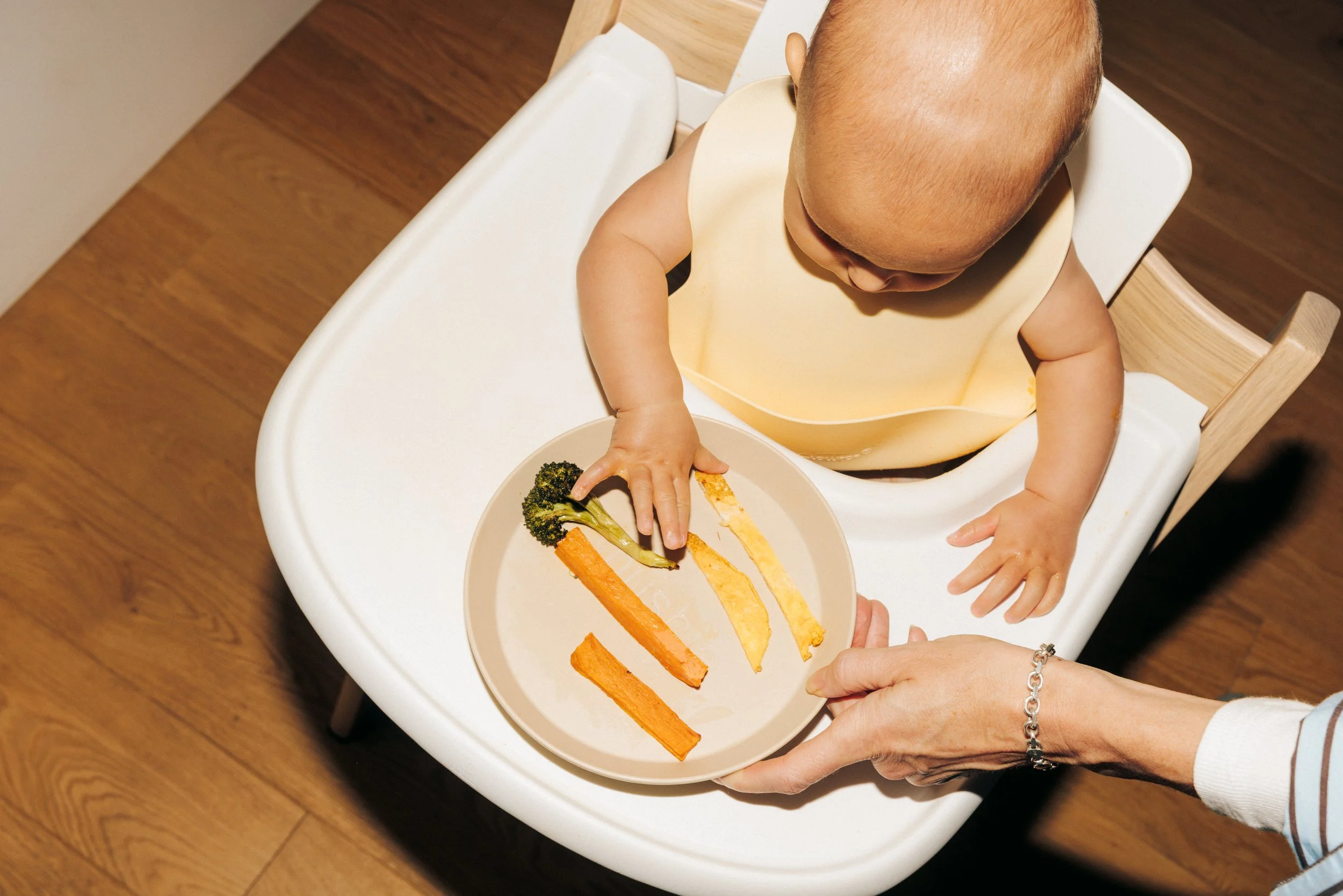
When babies begin solids, one of the first pieces of advice parents hear is to keep salt out of baby's food. While it’s sound guidance, it often turns into the belief that a baby should never eat anything that's been seasoned. That can make family meals stressful, and it leaves many parents second-guessing every bite of a dinner that was salted, even lightly.
Part of the confusion comes from using "salt" and "sodium" as if they mean the same thing. They're closely related, but they aren't the same, and knowing the difference makes it much easier to put recommendations into practice without overcomplicating things.
Salt vs sodium
Salt and sodium are often viewed as interchangeable, but they aren’t the same. Salt (sodium chloride) is what we add to food, while sodium is an essential mineral that also occurs naturally in many foods, such as eggs, meat, and vegetables.
Sodium plays an important role in fluid balance, nerve function, and muscle function. It’s naturally present in many foods and breast milk, and is also included in infant formula because babies require sodium for normal growth and development.
What about salted food?
Parents don't need to worry about the small amount of naturally occurring sodium in whole foods, but what about table salt?
The salt we add ourselves makes up a much smaller share of sodium intake than most people expect. Research on where sodium comes from in the average diet found that salt added during home cooking accounts for about 5.6% of total intake, and salt added at the table accounts for about 4.9%. Foods with naturally occurring sodium contribute around 14%.
Where sodium adds up
What matters most is how much sodium your baby is getting overall and where it’s coming from. Packaged, refined, and convenience foods can contain significantly more sodium than whole foods. In fact, it’s been shown that processed foods and restaurant meals make up as much as 75%. This is where sodium can add up quickly.
As a result, for babies and toddlers, it’s worth being extra mindful of:
Cured and deli meats, such as sausages, bacon, and ham
Crackers, puffs, and other packaged snacks
Store-bought broth, stock cubes, and canned soup
Canned beans and store-bought hummus
Soy sauce, ketchup, commercial sauces, and dressings
Cheese and cottage cheese
Sodium in cheese varies widely. For example, parmesan, feta, and halloumi are much higher in sodium than ricotta, fresh mozzarella, and Swiss.
A few simple swaps can lower sodium a lot without making baby's meals bland. Soaking and cooking dried beans at home avoids the sodium in canned versions, and it makes the beans easier for little tummies to digest. Homemade bone broth lets you season the family's portion separately. Herbs and spices add plenty of flavour once baby has tried a food plain, so cutting back on salt doesn't have to mean cutting back on taste.
Navigating family meals
If you can easily set aside baby's portion before salting a family meal, go for it. But a few bites of a lightly seasoned, home-cooked dinner are very different from regularly eating high-sodium packaged foods. An occasional taste from your plate, or a little sauerkraut, isn't cause for concern. What matters most is your baby's overall pattern of eating and where most of their sodium comes from.

The Solids Club
If you'd like more support with questions like this as your baby starts solids, The Solids Club walks you through first foods, nutrients, allergen introduction, and more from a whole-food perspective. You’ll also get access to our team of Certified Nutrition Consultants to have your questions answered directly.
Download our guide to learn about some uncommon and nutrient-dense foods we highly recommend feeding your baby.