
Why “One More Bite” Does More Harm Than Good
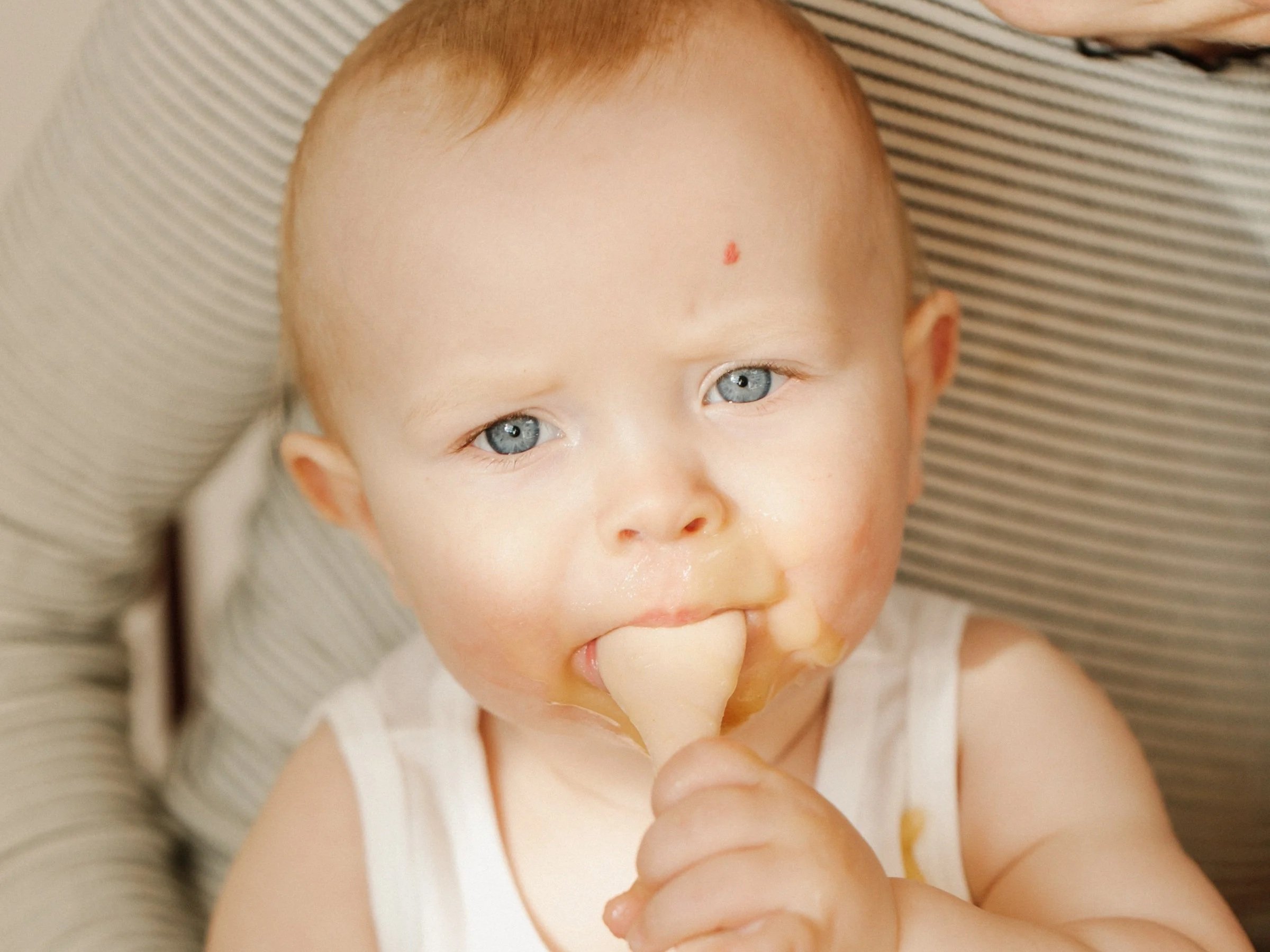
The first year of solids has a lot of moving parts to consider: when to start, what to offer, allergen exposure. But underneath it all, you're also doing something important that parents often don't realize… you're building your baby's relationship with food.
The habits and instincts formed in this first year can impact your baby throughout their life. So, while a nourishing plate is crucial to growth and development, a mindful approach is critical for their future.
The window of opportunity
Between about 6 and 10 months, babies move through what's often called a window of opportunity. This stretch of time is when offering a wide range of flavors and textures can have the biggest influence on what a child will accept later on.
When starting solids, it's also completely normal for a new food to be turned down more than once before it's accepted. In fact, research shows it can take up to 15 introductions for a baby to warm up to something unfamiliar. So an early "no" from your baby doesn't mean a food is off the table for good, you may just need to try serving it again a few more times before it's accepted.
Respecting signs of fullness
Babies are born with a strong sense of when they're hungry and when they're full, the same instinct that lets a breastfed baby stop nursing once satisfied. Even though it's well-meaning, many parents unknowingly try to override their baby's instincts once solids start.
Phrases like "just one more bite" may feel harmless, but they teach a baby to keep eating past their own signal of fullness instead of trusting it, a disconnect that many adults spend years trying to undo.
It's important to recognize and respect your baby's signs of fullness. These may look like turning their head from the spoon, pushing food away, shifting from focused eating to playing with their food, getting upset, or simply losing interest and wanting out of the highchair.
Treat these cues as a sign that it's time to end the meal, even if you think they "haven't eaten enough" yet.
It can help to reframe your job: instead of "it's time to feed my baby," think of it as "it's time to offer my baby food." Your responsibility as a parent is to offer nourishing options at regular intervals, how much gets eaten is up to your baby.
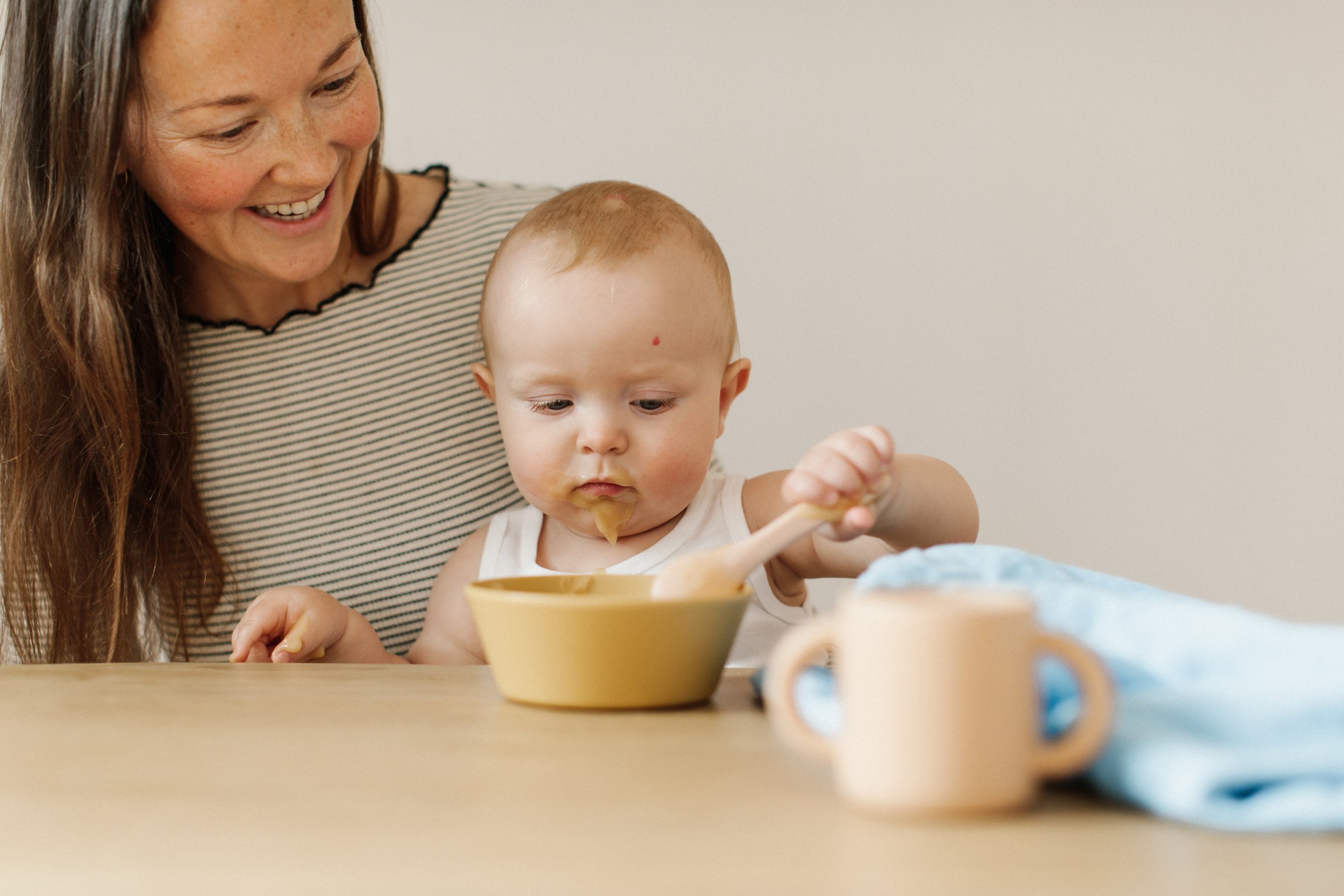
Food isn't the cure for boredom
The habit of mindless snacking can start young, especially when convenience foods (pouches, baby puffs, rusks, etc.) are introduced as a means of "distracting" your baby.
As tempting as it can be, we don't want to use food as a tool to increase patience in the car, keep them calm in the stroller, or generally placate them in situations where you might not be readily available to interact with your little one. Instead of offering snacks, try age-appropriate toys, music, or another activity that can provide the same effect without impacting future eating habits.
Family meals teach more than food
Babies are watching long before they begin eating, themselves. Research on family meals consistently finds that eating the same food as the rest of the family is one of the factors most strongly linked to better long-term diets in children.
Family meals do more than model good eating. They also carry rituals and a sense of security that a baby picks up on well before they understand the conversation happening around them.
Sharing meals doesn't require a baby to eat table food outright either. If you aren't doing baby-led weaning or haven't introduced finger foods yet, you can puree or mash parts of what the rest of the family is having.
The pattern matters more than a single meal
None of this is about getting every meal perfect in the first year. It's about setting the patterns that build the foundation: that food can be varied and interesting, that a baby's own sense of fullness can be trusted, and that meals are something shared rather than something to get through.
Those are the patterns a child carries with them long after the highchair is gone.
Become a Certified Nutrition Consultant and learn to help families confidently start solids with their babies.
Download our guide to learn about some uncommon and nutrient-dense foods we highly recommend feeding your baby.