
A Guide for Postpartum Visitors

How to Support a New Mother
Supportive postpartum visitors understand that the time after birth are a time for maternal recovery, bonding, and rest — not social hosting.
In those first days and weeks after birth, motherhood is tender. You’re recovering from labor, still learning your baby’s rhythm, and you’re probably exhausted. It’s an emotional, beautiful, and messy time. Yet this sacred transition is often treated like a social event by well-meaning family and friends.
If you’re navigating visitors in your postpartum space (or visiting someone in theirs), there are a few important things to keep in mind.
1. New mothers should not be “hosting” visitors
During this tender time, visitors should be caring for the new mom, not the other way around.
Tip for new mothers: Think about who you will feel safe having in your space. Will you be comfortable breastfeeding, bleeding, or wearing adult diapers around them? Or will you feel the need to host?
2. Offer practical help
Instead of sying “Let me know if you need anything,” try:
“I’m going to load the dishwasher.”
“I’ll fold this laundry.”
“I’ll just take the dog out for a walk before I go.”
”I’m heading to the store this morning, what can I grab you?”
Maternal rest is foundational to recovery, milk supply, hormone regulation, and overall wellbeing. Visitors need to prioritize the mom and help out where they can.
Tip for new mothers: Leaving a list of helpful chores and tasks on the fridge can make it easier for visitors to support you without needing to directly ask.
3. Keep postpartum visits short and planned
Do not assume you’re welcome or that you can just “pop by.” Being invited over in the early days is a privilege, and you should plan for visits to be brief (usually around 20–30 minutes). Remember, you’re there to support the mom, so if baby is sleeping during the visit, that’s perfectly okay.
Tip for new mothers: Things you can say to protect your space: “We’re keeping visits short.” “We’re focusing on rest and recovery in these first weeks.”
4. Create a judgment- and advice-free space
Moms need support and not judgement. You may have done things differently or have strong opinions, but this isn’t the time to discuss that. Unless mom asks, don’t offer any unsolicited advice.
Tip for new mothers: Think about who was supportive, listened, or felt like they were on your side during pregnancy — or unfortunately, who was not. This can help guide which visits feel supportive to welcome early on, and which may be better delayed.
5. Always follow mom’s lead
Those early days can be very raw and you shouldn’t assume anything. Some new moms feel supported when someone holds and cares for their baby while they rest or shower, while others may be overwhelmed by that. Check in with her often and be sure to respect her wishes without question.
Tip for new mothers: Discuss boundaries with your partner so they can help communicate and uphold them.
6. Bring nourishing food
New moms need deep nourishment to replenish their bodies, while also prioritizing rest and recovery. One of the most thoughtful things you can do is drop off healthy meals and snacks.
Protein-rich, warming, one-handed options are incredibly supportive. Our mineral-rich Turmeric Spiced Fudge is an easy, nourishing option.
Tip for new mothers: Having a friend or family member set up a meal train can be an excellent way to coordinate postpartum support.
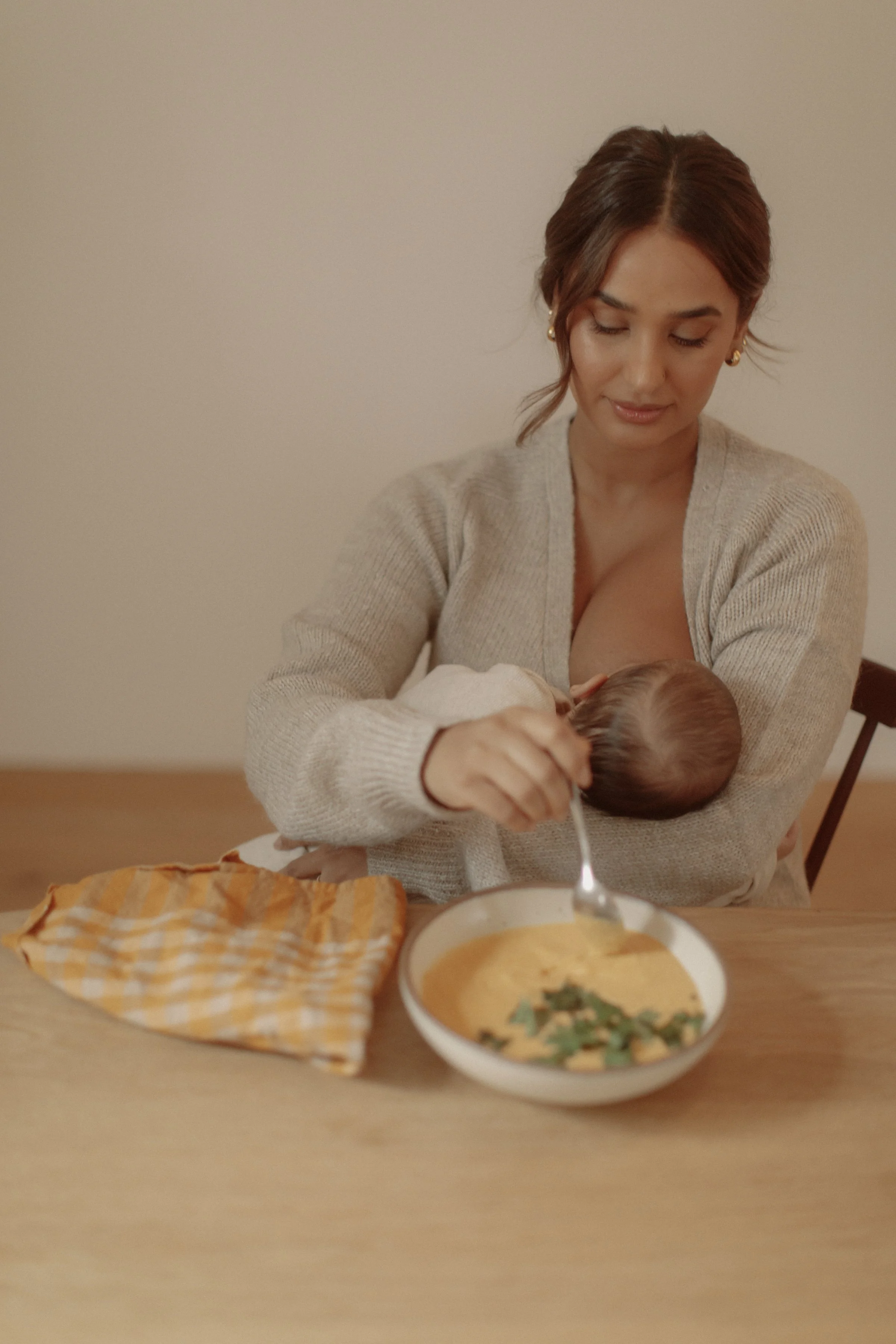

I can confidently say that moms will never forget the people who were there for them during their postpartum period. It’s also a beautiful feeling to be able to offer this type of love and support for the women in your life as they enter a new chapter.
It’s not a coincidence that it’s often the other mothers in our lives (with busy schedules and families of their own!) showing up for us the most in these precious moments.
I sincerely hope you get to experience both having your village rally around you and being a villager for other mamas during this beautiful time.
Become a Certified Nutrition Consultant
Learn to holistically support mothers and babies through fertility, pregnancy, postpartum, and starting solids. Flexible, self-paced certification courses — rooted in traditional wisdom and supported by modern science.
